Harmful Algal Blooms
Although phytoplankton are primary producers that support marine food webs, some species can become harmful when their growth disrupts ecosystems or produces toxins. Harmful algal blooms can contaminate seafood, close harvest areas, stress aquaculture and fisheries, and create risks for coastal communities. In collaboration with the Department of Marine Plankton at the Institute of Oceanography, Vietnam, we study potentially harmful and toxin-producing algae in coastal waters. This work connects seasonal field observations, microscopy, morphology, phylogeny, and culture experiments to improve species identification and understand when harmful taxa occur. Closely related algae can have different ecological roles, toxin potential, and environmental tolerances, so species-level identification is central to interpreting bloom risk. In tropical coastal waters, warm temperatures, variable salinity, coral reefs, seagrass beds, seaweeds, and other benthic habitats can support harmful dinoflagellates, including taxa associated with diarrhetic, ciguatera, or paralytic shellfish poisoning. Understanding their growth conditions, seasonal occurrence, toxin potential, and species boundaries provides the biological foundation for coastal monitoring and seafood-safety decisions.
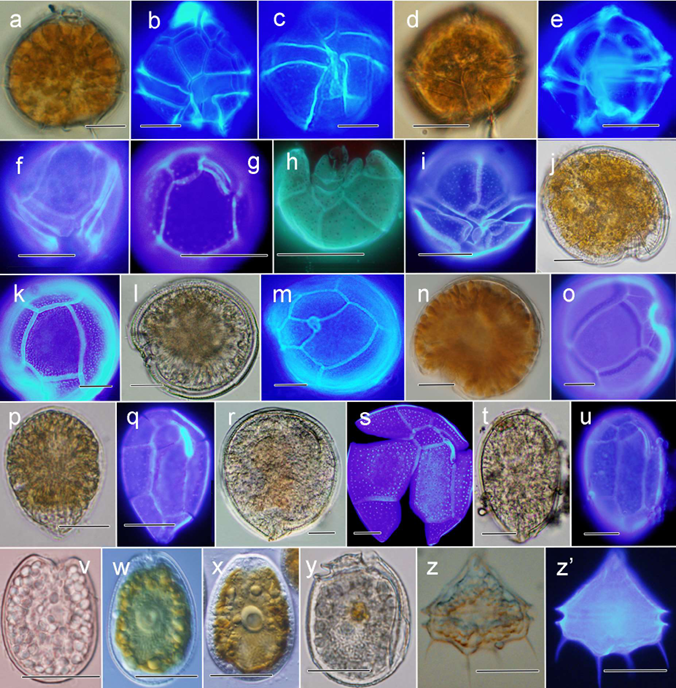
Morphological examination followed by DNA sequencing is essential for reliable species identification, especially for potentially harmful algal taxa that can look very similar under the microscope. Culture experiments can provide additional confirmation. Accurate species identification helps assess bloom risk, toxin potential, ecological impacts, and risks to marine food products in coastal Vietnamese waters. Credit: Department of Marine Plankton, Institute of Oceanography, Vietnam. (Nguyen-Ngoc et al. 2025)